

Bluetti AC180 vs EcoFlow DELTA 3 Plus
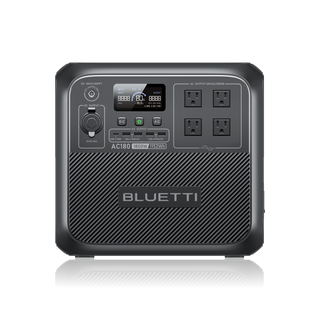
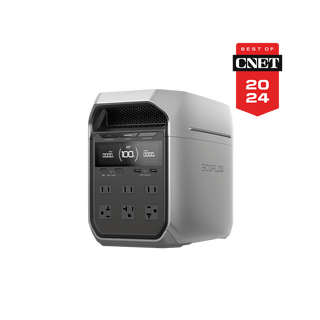
What is the difference?
The Bluetti AC180 has 1.8 kW of power, 2.7 kW peak, a 1.15 kWh battery. The EcoFlow DELTA 3 Plus has 1.8 kW of power, 3.6 kW peak, a 1.02 kWh battery.
Both use LiFePO4 batteries.
The Bluetti AC180 is rated for 3500 cycles, the EcoFlow DELTA 3 Plus is rated for 4000 cycles.
The Bluetti AC180 takes up to 500 W from solar, the EcoFlow DELTA 3 Plus takes up to 1000 W from solar. The EcoFlow DELTA 3 Plus charges faster from panels.
The Bluetti AC180 weighs 37 lb, the EcoFlow DELTA 3 Plus weighs 28 lb. The EcoFlow DELTA 3 Plus is easier to carry.
Both have a 5-year warranty.
The Bluetti AC180 charges from a wall outlet to 100 % in 1.8 h, the EcoFlow DELTA 3 Plus charges from a wall outlet to 100 % in 56 min. The EcoFlow DELTA 3 Plus is ready again sooner.
The EcoFlow DELTA 3 Plus can add extra batteries.
Specs side by side
| Bluetti AC180 | EcoFlow DELTA 3 Plus | |
|---|---|---|
| Capacity (Wh) | 1152 | 1024 |
| Continuous (W) | 1800 | 1800 |
| Peak (W) | 2700 | 3600 |
| Solar input (W) | 500 | 1000 |
| Chemistry | LiFePO4 | LiFePO4 |
| Cycles | 3500 | 4000 |
| Expandable | — | yes |
| Weight (lb) | 37 | 28 |
| Warranty (yr) | 5 | 5 |
| Fridge run time | 21.7 h | 19.3 h |
| CPAP run time | 26.1 h | 23.2 h |
| Wi-Fi router run time | 76 h | 67.6 h |
| Check on Amazon → | Check on Amazon → |
Specs as read from manufacturer pages on 2026-10-26 / 2026-10-25. Specs one maker does not list are left out of the comparison. Run times are for that appliance alone with a typical duty cycle, after inverter and depth-of-discharge losses. Sponsored links; we may earn a commission.
Common questions
Which has more capacity, Bluetti AC180 or EcoFlow DELTA 3 Plus?
The Bluetti AC180. More capacity: 1152 Wh vs 1024 Wh.
Which is lighter, Bluetti AC180 or EcoFlow DELTA 3 Plus?
The EcoFlow DELTA 3 Plus. Lighter: 28 lb vs 37 lb.
Which charges faster from solar, Bluetti AC180 or EcoFlow DELTA 3 Plus?
The EcoFlow DELTA 3 Plus. Faster solar charging: 1000 W input vs 500 W input.
More comparisons
- Bluetti AC180 vs Anker SOLIX C1000 Gen 2
- Bluetti AC180 vs Jackery Explorer 1000 v2
- Bluetti AC180 vs Jackery Explorer 1500 Ultra
- Bluetti AC180 vs Jackery Explorer 1000 Plus
- EcoFlow DELTA 3 Plus vs Anker SOLIX C1000 Gen 2
- EcoFlow DELTA 3 Plus vs Bluetti Elite 100 V2
- EcoFlow DELTA 3 Plus vs Bluetti AC70
- EcoFlow DELTA 3 Plus vs Jackery Explorer 1000 Plus
Compare other models → · All Bluetti models · All EcoFlow models